Crecimiento and Horizen co-ran the Horizen Acceleration Season, a six-week, fully online accelerator for startups ready to build on Vela, Horizen's confidential compute layer. It ran from September 7 to October 15, 2026, and closed with a live Demo Day before a panel of investors, angels and ecosystem leaders.
The starting point
Some products cannot exist on a public blockchain, because their logic is too sensitive or their data too private. Vela was built for those cases, and it solves them like this. Teams package their logic as a WASM job, run it inside a sealed trusted execution environment and settle the result onchain. The computation stays private and the result stays verifiable.
When the program opened, Vela was in early access, and Horizen wanted to keep bringing startups onto its technology at that stage, so that the first products on Vela would be born alongside the team that builds it. For the startups, it was the chance to build something that would not have been possible anywhere else, with direct access to the platform's engineers.
On that basis, the season was designed with two goals. The first was to take each startup from a first integration to a live deployment on Vela. The second was to accelerate each company as a business, in product, go-to-market, pitch and investor readiness.
The call
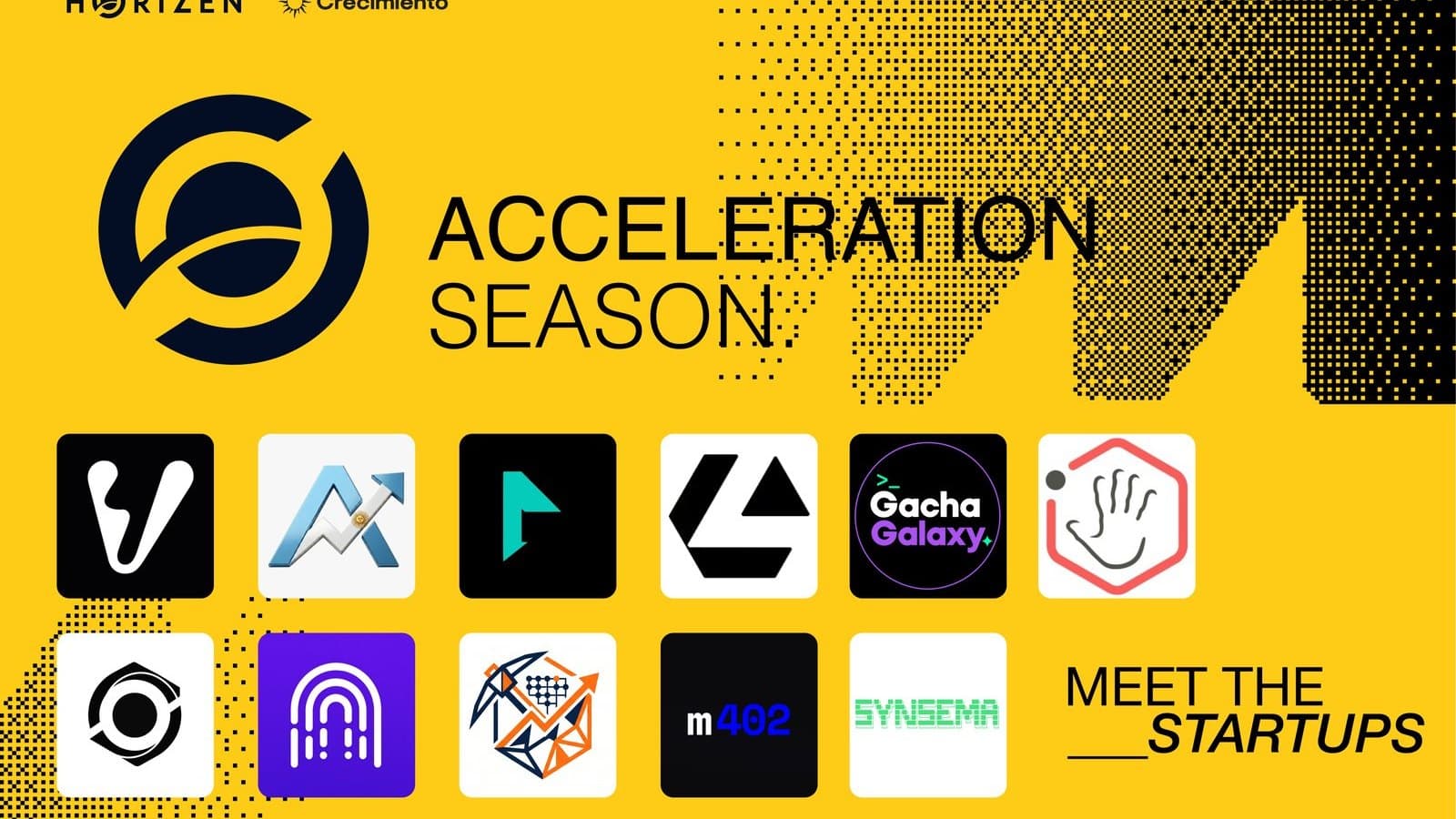
Applications opened on August 5 and closed on September 2. The call was global and aimed at early-stage teams with a use case that genuinely needed confidential execution, whether crypto-native or coming from web2. Eleven startups from six countries across three continents were selected: Noct Finance, Gacha Galaxy, Velum, DetentLabs, Austral Finance, Synsema, zCred, Layrs Lab, metaMe, PREVA and m402. Private lending, confidential trading vaults, agent payments, onchain identity, transaction security and more. Every one of these products has sensitive logic that needs to stay private and results that need to be verifiable.
The six weeks
The curriculum followed the arc Crecimiento applies across all its Acceleration Seasons, Build, Grow, Show, opening with an onboarding week. Teams onboarded to Vela alongside the Horizen team, built a working prototype with their own logic running end to end, stress-tested their business model and go-to-market, and closed with pitch preparation and Demo Day.
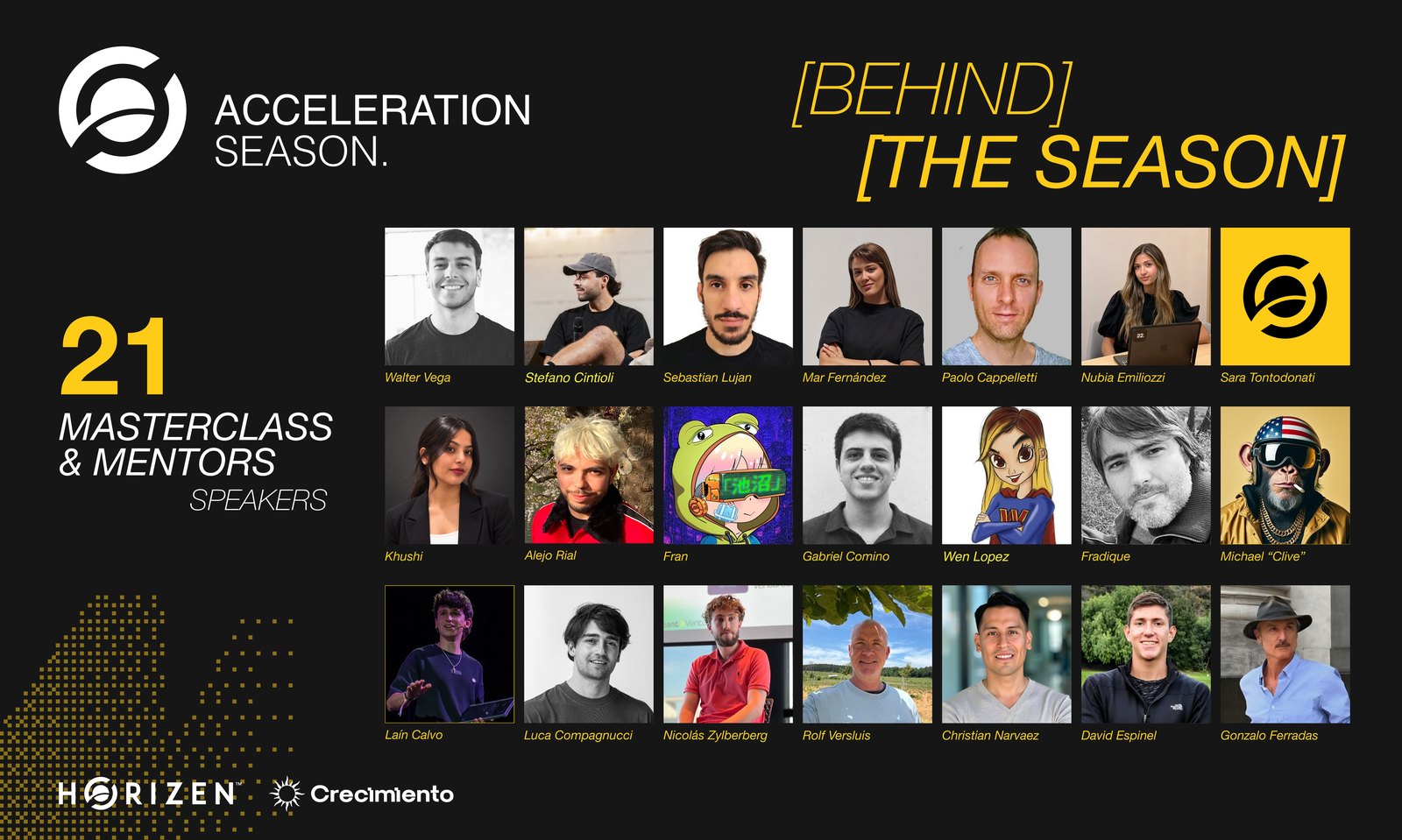
Along the way they received six masterclasses, on Vela onboarding and integration, product and design, go-to-market, fundraising and the investor's view, plus six group mentoring sessions, four rounds of office hours with Vela's DevRel and zkVerify teams, and more than 30 hours of one-on-one mentoring. Over six weeks, more than 20 people showed up for this cohort through masterclasses, mentoring sessions, office hours and Demo Day. Each of them brought real experience to the table and gave these founders their time. Horizen and the Vela team, for their part, ran the technical track and the deployment reviews.
The results
The results came in two layers. On the product side, teams ran their own logic end to end on the Vela stack, most within a day of starting, and moved toward testnet deployment. metaMe went live on Base Sepolia on October 13 and became the first application in the cohort to run on Vela's testnet, with a three-party computation in which each party received only its own result. Synsema shipped 29 releases of its programming language with Vela support built in, published five open-source Vela apps and ran a shared devnet that other teams in the cohort deployed on. zCred went from a blueprint to seven contracts on Base Sepolia and a live demo. Gacha Galaxy built a private pricing app covering more than 24,000 graded cards and a million price points, relaying results to Robinhood Chain. Noct Finance tripled its waitlist and moved from a zero-knowledge design to TEEs on Vela.
On the ecosystem side, the cohort left pieces that go beyond any single product. Synsema opened a shared devnet that other teams deployed on and published a second way to write Vela apps, lighter than the official kit. Several startups released their code as open-source reference apps, and Noct Finance developed a platform extension that is now under evaluation as a native feature. The startups keep building on Vela.
Demo Day
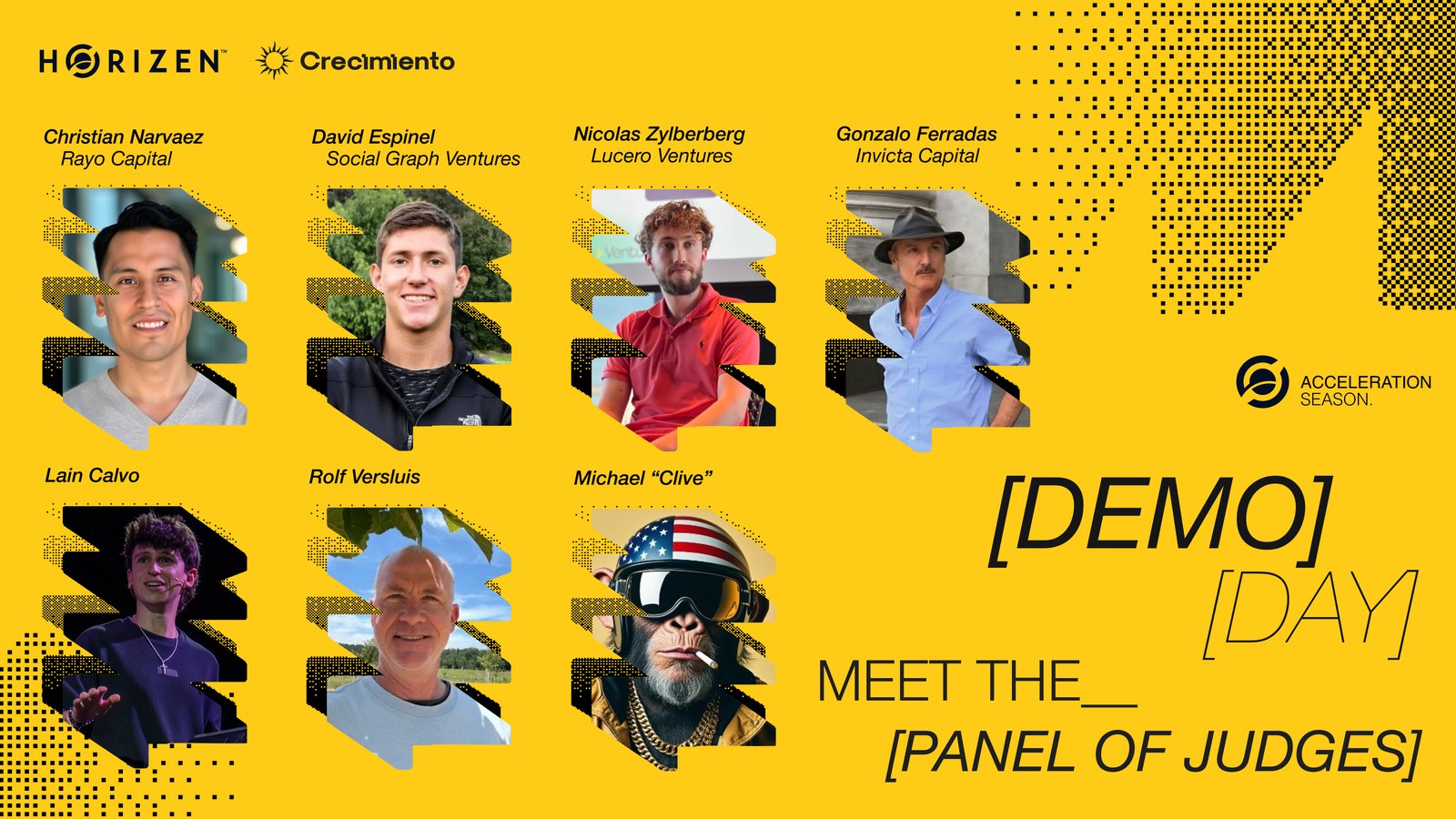
The close came on October 15, with nine startups pitching online before the panel and more than 500 people following live. Every Acceleration Season ends in a Demo Day for a reason. Six weeks of work need a destination, and that destination is standing in front of the people who can invest in the company. The judges' questions also return an outside view on the product and the business.
Relive the full Demo Day: