
For years, Latin America adopted digital assets before its institutions did. In Argentina, close to 20% of the population holds digital assets, around 8.6 million people, and stablecoins account for more than half of what is bought on local exchanges. The region moved 730 billion dollars onchain in 2025 and its user base grew three times faster than in the United States. Banks and regulators did not drive that adoption. People did, pushed by inflation, currency controls and the limits on moving money abroad.
In 2026, the institutions began to cross over. The world's largest banks already operate onchain and the major asset managers run tokenized funds worth billions of dollars. In Argentina, the CNV launched its registry of virtual asset service providers and expanded its tokenization regime, and the Central Bank moved toward allowing banks to offer digital asset services. Crecimiento has worked on that crossing since 2024, with five editions of Regulation Day and more than 15,000 people who have gone through its programs. The LATAM Digital Assets Conf was designed as the next step, a conference where banks, regulators and the teams building the infrastructure would sit in the same room.
On August 20 and 21, Crecimiento organized in Buenos Aires the first edition of the LATAM Digital Assets Conf, a two-day institutional conference at the intersection of digital assets, traditional finance and regulation. The conference registered more than 700 attendances, with 70 speakers across 20 panels. Banks, chambers, fintechs, exchanges, funds, lawmakers and the companies developing the region's stablecoin and tokenization infrastructure took part. The agenda was split into two days, the first devoted to stablecoins and payments and the second to tokenization, capital markets and regulation.
Day 1: stablecoins and payments
The opening panel brought together Hugo Moraes Rodrigues da Silva (Yellow Card), Guillermo Goncalvez (El Dorado) and Lucas Posada (Takenos) to examine how stablecoins already move money across Latin America, in remittances, in retail and in the daily operations of companies. Juan Paradela (ChainPatrol) moderated. Next, Francesca Petrazzini (Andén) spoke with Agustín Pesce (Guardline) and Pablo Moauro (ADEBA) about what happens when traditional banking meets digital assets and what the region's banks still need in order to operate with them.
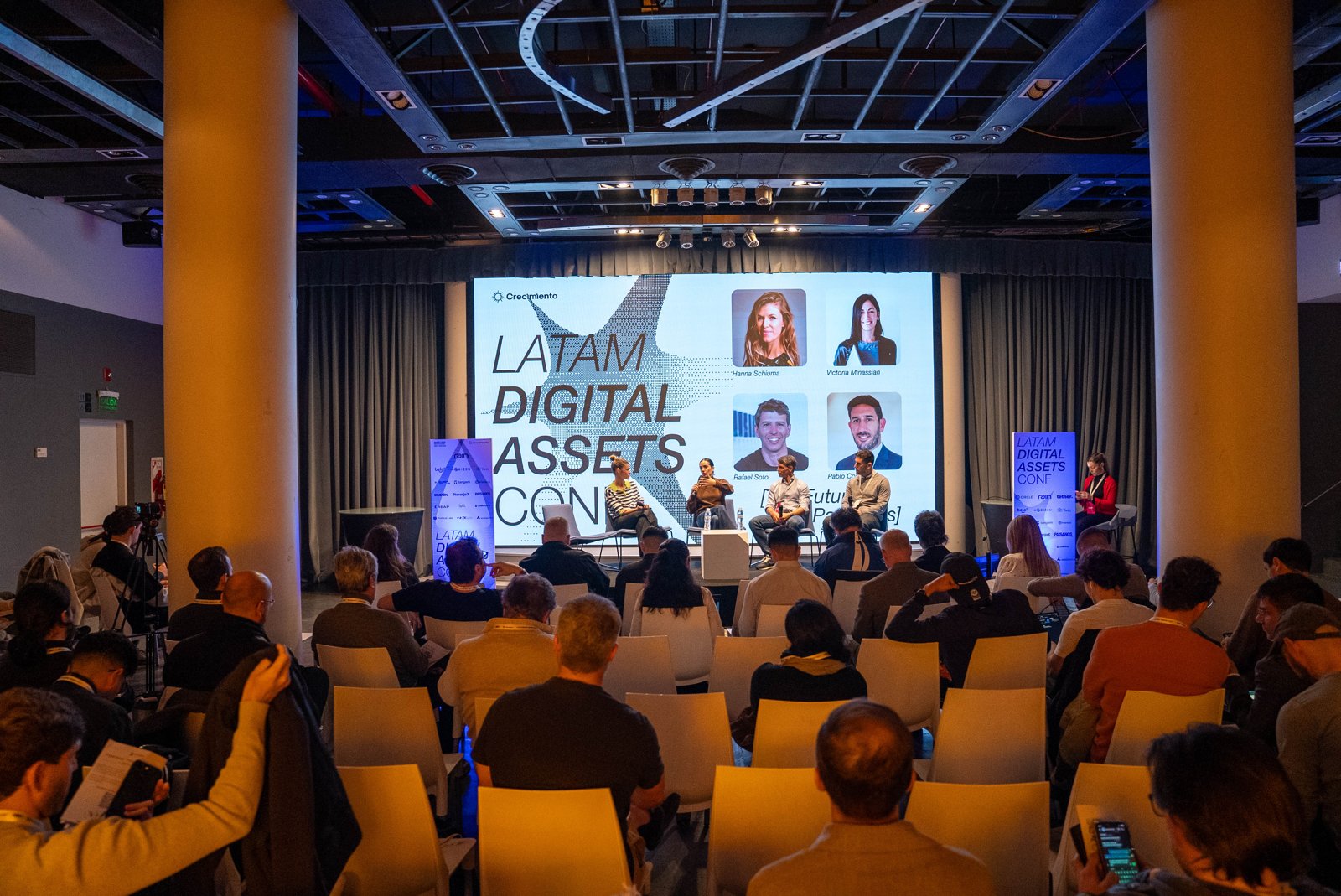
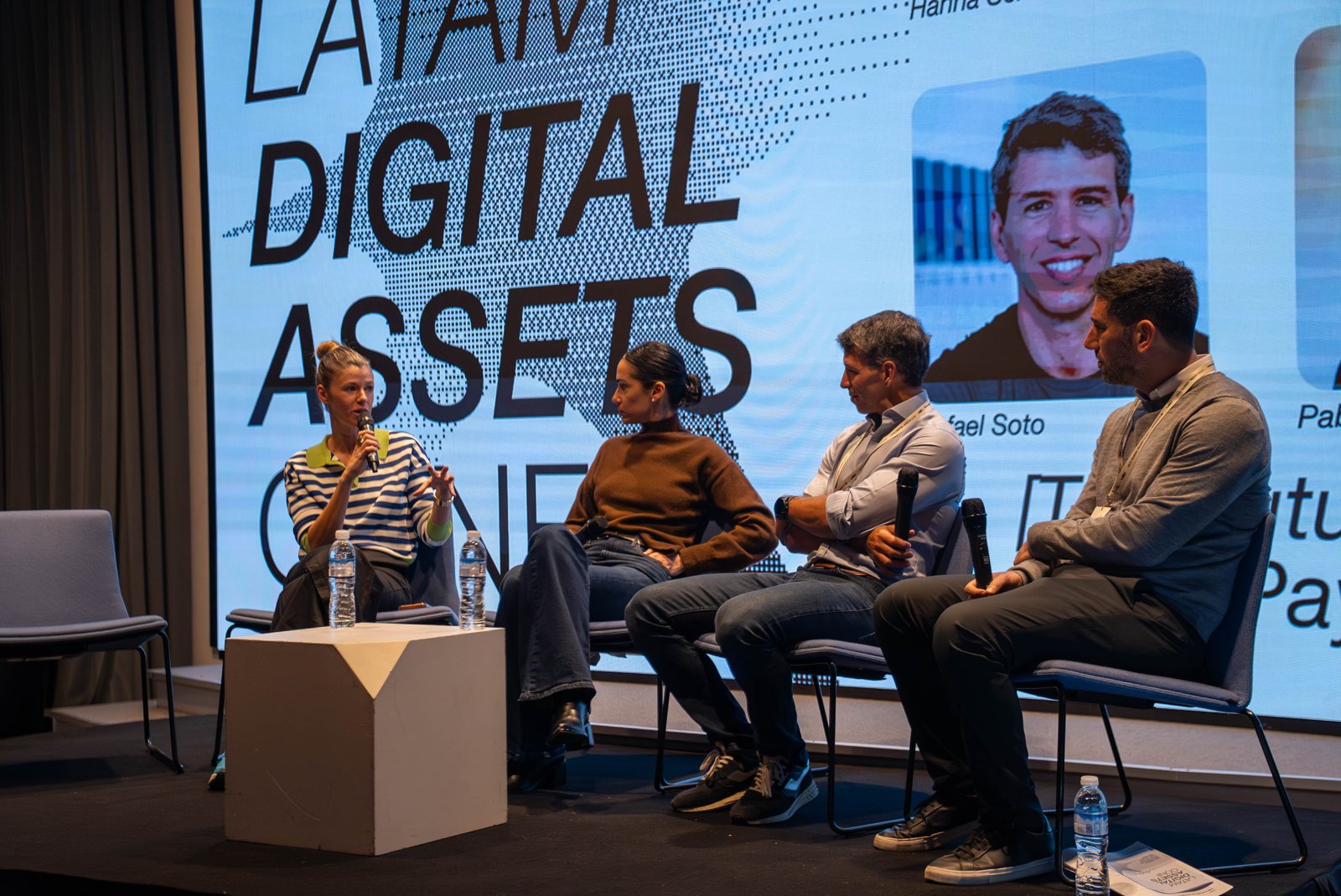
Hanna Schiuma (Lucero Ventures) moderated the panel on the future of payments, with Victoria Minassian (Naranja X), Rafael Soto (MODO) and Pablo Cordón (APPA). The morning closed with artificial intelligence. Pilar Rodríguez (Cambrian) and Bebe Pueyrredón (Bombo) discussed what changes in money when software begins to transact on its own, with Candela Fazzano (Devcon, Ethereum Foundation) moderating.
The afternoon began with payments between companies in different countries. Julián Colombo (Bitso), Lucas Chaquea Guarnizo (Reap) and Guilherme Santos (Interlace) explained how companies move money across borders today and which rails are being built to make it faster and cheaper. Arturo Grande (Celo) led the conversation. The panel on local-currency stablecoins followed, with Alfredo Roizenvit (DIPE), Rafael D'Ambrosi (Twin) and Jean Everson Martina (NORA Finance), moderated by Facundo Werning (Agora), on pesos and reais onchain and the FX layer the region needs.
Pablo Wende asked Gastón Irigoyen (Pomelo), Manuel Beaudroit (belo), Jorge Javier Eguino (Rain) and Santiago Maiztegui (Fiserv) how cards connect with digital assets and how the bridge to fiat works for the end user. In "Why Even Crypto?", Gabriel Gruber (Exa App) and Federico Goldberg (Manteca) answered the question everyone working in the sector has been asked at some point. Martín Benitez (Cámara Fintech Uruguay) moderated. Rodrigo Benzaquen (BoulderTech) and Daniel Rabinovich (Mercado Libre) held a fireside on building companies in very different industries and what one can learn from the other.
The day closed with public policy. National congress members Martín Yeza and Julia Strada spoke with Santiago Bermúdez (Andén) about how digital asset regulation is being written in Argentina and across the region.
Day 2: tokenization, capital markets and regulation
The second day opened with Bitcoin. Borja Martel Seward (Roxom), Matías Gallardo (EverValue), Azul Alonso (Tangem) and Rodolfo Andragnes (ONG Bitcoin Argentina) examined where the markets are heading and the state of self-custody, with Camila Velasco (Spark101) moderating. On the custody, compliance and security panel, Leandro Pereira (Dfns), Sarina Gowland (Fireblocks) and Fiorella Scantamburlo (Certora) explained what it takes to hold digital assets at institutional scale. Bruno Torossi (Opsek) moderated.
Cristian Bohn (Circle) and Luis Leiva (BIND) held a fireside on what tokenization looks like from inside a regulated bank, with Tomás Cordero (BuFi). Before lunch, Santiago Siri (Democracy Earth Foundation), Federico Pinho (Government of the City of Buenos Aires) and city legislator Darío Nieto discussed how AI adoption is progressing in Argentina, from the public and the private side.
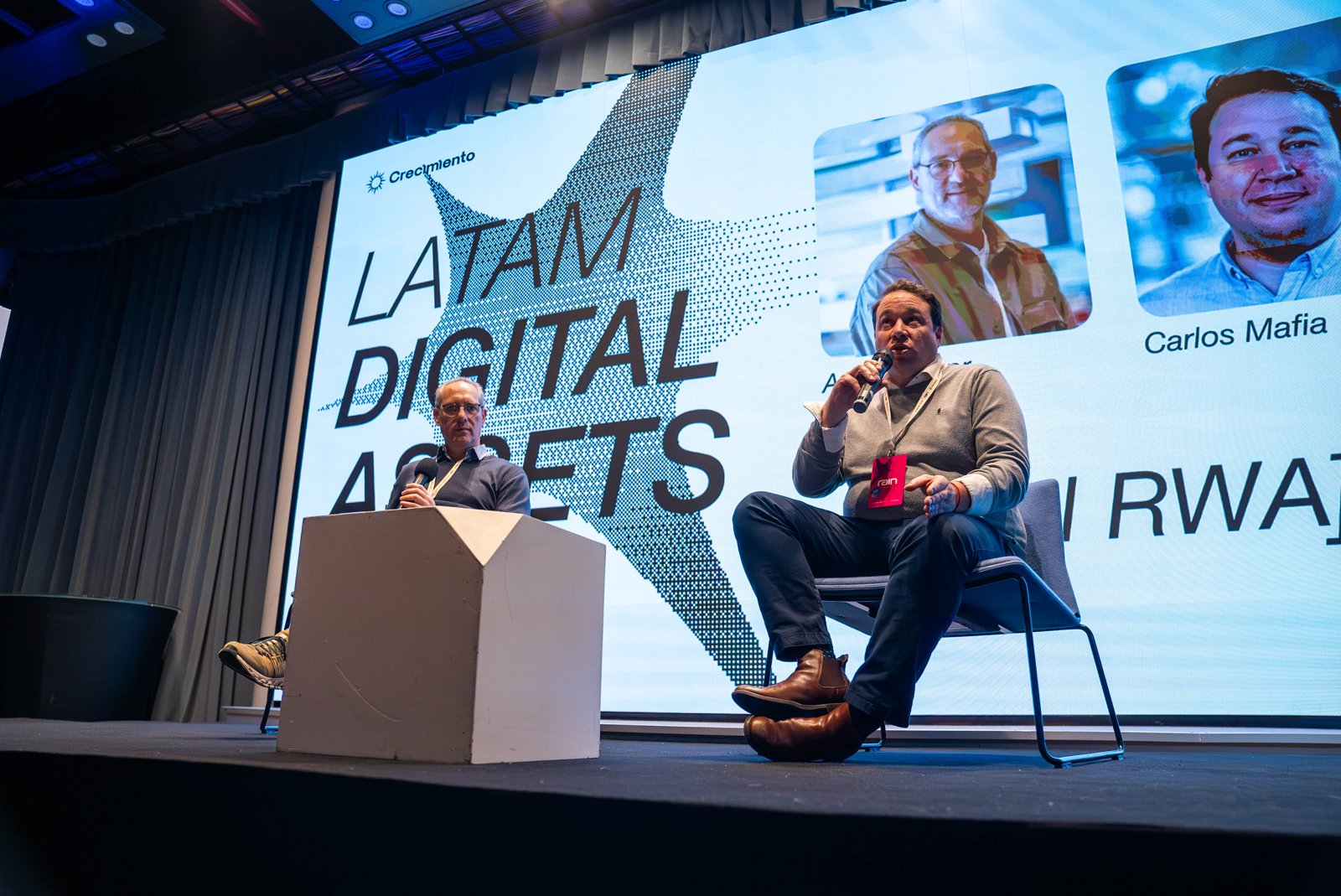
In the afternoon, Olaf Kudin (1inch) and Luca Cosivi (OpenZeppelin) presented DeFi protocols as financial infrastructure, in a panel moderated by Nicolás Gallardo (Octant). Gonzalo Pascual Merlo (BYMA Digital) and Facundo Vázquez (Poincenot) analyzed with Hanna Schiuma how regulated capital markets move onchain. In "Real RWA", Carlos Mafia (YPF Luz) showed what tokenizing real assets means when the asset is energy infrastructure, in a conversation with Ariel Scaliter (Justoken).
Vicente Gutiérrez (Banco Galicia and ADEBA Joven), Gaspar Eskenazi (Grupo Petersen), Juan Francisco Juárez and Paula Debenedetti (Red Link) debated what the region's banking system needs for its next stage. On the panel on regulation in Latin America, Milagros Santamaría (Andén), Gabriela Battiato (ONG Bitcoin Argentina), Ricardo Prieto (Cámara Paraguaya de Blockchain) and Juan Manuel Campos (SyLS) reviewed where the rules are heading in each country, with Ana Ojeda (Blend) moderating. The final panel brought together Juan Sobral (Cámara Blockchain Uruguay), Mario Castro (Asociación Blockchain Paraguay) and Diego Díaz (Cámara Argentina Fintech) to examine the role of industry chambers in the ecosystems they represent. Francesca Petrazzini moderated.
Every talk from both days is available on YouTube.
Startup World Cup and Aleph Week
The conference closed on the evening of the 21st with the second edition of the Startup World Cup, at Aleph Hub. Seven startups pitched before a jury of Jerónimo Alazraki (Latitud), Mateo Guigue (Newtopia), Nicolás Zylberberg (Lucero Ventures) and Milagros Santamaría (Andén), with Arturo Grande (Celo) as host. The jury chose NORA Finance, which builds BRS, a stablecoin backed 1:1 by Brazilian reais, and which joins Inception, Andén's program for Latin American tech companies. Its co-founder, Jean Everson Martina, had taken part the day before in the local stablecoins panel. The details are in the Startup World Cup recap.
The conference opened Aleph Week. On August 22 and 23, the sixth edition of the Aleph Hackathon took place, with 650+ hackers, 150+ projects and 11 chapters across seven countries (recap here).
Sponsors and partners
Circle and Tether joined as Gold Sponsors. Rain, belo, Horizen, Twin, EverValue, Tangem, Interlace, Andén, Naranja X, Reap, ChainPatrol, Paisanos, SyLS and Protocol Labs joined as Silver Sponsors. Planta ran the networking with Porter, an agent that works over WhatsApp, tells each attendee who will be in the room and coordinates introductions when both sides agree.
The second edition of the LATAM Digital Assets Conf will take place in August 2027. Until then, Crecimiento's Acceleration Seasons, multi-week programs built with protocol partners that close with Demo Days in front of funds, carry forward the path of the startups that took part in the Startup World Cup and the hackathon.