
Crecimiento began in February 2024, when Juan Benet (founder of Protocol Labs, inventor of IPFS and Filecoin) and Martín Carrica (co-founder of Mountain Protocol) asked themselves a simple question: can a pop-up city kick-start a movement that transforms Argentina's economy?
The idea came from a reading of the moment. Argentina had just closed 2023 with 211% annual inflation, and in that same country millions of people were already using crypto every day, its technical talent was recognized worldwide, and there was a new political willingness to listen. Adoption from the bottom up, ambition from the top down. The question found an echo right away: James Tunningley, Molly Mackinlay and Ruben Amen joined from Protocol Labs, along with Janine Leger, co-founder of Zuzalu and Edge City, the format that would inspire Argentina's pop-up city.
In April, The Argentina Opportunity virtual summit brought all the voices together for the first time: founders like Marcelo Cavazzoli (Lemon), public officials, investors, journalists and community leaders. Then came the trip to Buenos Aires, and there the movement became physical: breakfasts on stablecoins, dinners with founders and investors, meetings with regulators and the Buenos Aires city government to explore a regulatory sandbox, visits to Lemon and Ripio, coworking sessions, asados and Fernet. Hundreds of leaders joined one by one. The movement even had a soundtrack: the playlist James put together still sounds just as good today.
The movement set itself three founding goals: bringing 5 to 10 million people onchain with great products, making Argentina's tech startup ecosystem ten times larger with funding and infrastructure, and giving startups more than 20 years of stability through a new regulatory framework.
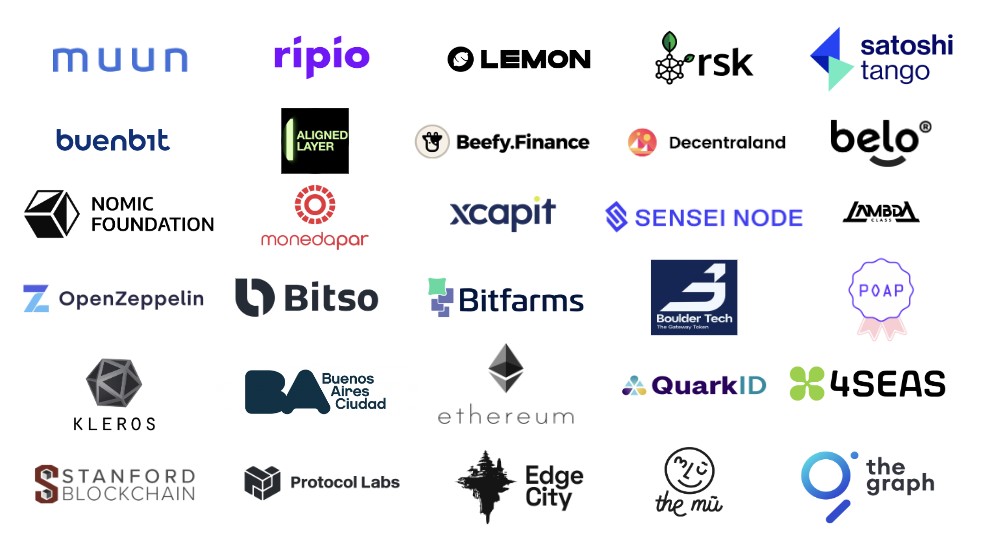
By August, Crecimiento already gathered more than 550 contributors working in dedicated working groups, backed by local companies like Lemon, Belo, Ripio and Mountain Protocol, global protocols like Protocol Labs, ZKsync, Avalanche, Solana and Worldcoin, and even the Buenos Aires city government. And the time came to meet: Aleph, Ciudad de Crecimiento, the country's first pop-up city. A full month in Buenos Aires with tracks on DeFi, privacy, infrastructure and governance: more than 3,000 attendees, 70 startups, 300 hackers at the first Aleph Hackathon, 70 students at the zero-knowledge bootcamp, more than 30 activities mostly organized by the community itself, and the first Regulation Day, which was the largest public-private Web3 gathering held in Argentina until then. That month deserves its own story, and it will get one.
The season also planted two institutional seeds that would become central to the movement's history. It was there that the regulatory sandbox and the Digital Special Economic Zone, inspired by models like RAK DAO and Estonia's e-Residency, were proposed for the first time. Neither existed yet. Both were set as a horizon.
Season 1 ended with something that did not exist in February: a movement with a name, a method and a community. What came next was the question of how to sustain it. But that is the story of Season 2.